Greater Bay Area Import Agency: Fix the Missing Importer
When there is no mainland importing party, cargo stalls before customs. Here is how a Greater Bay Area import agency closes the gap and moves the file.
Author SEEHOG South China port editorial desk
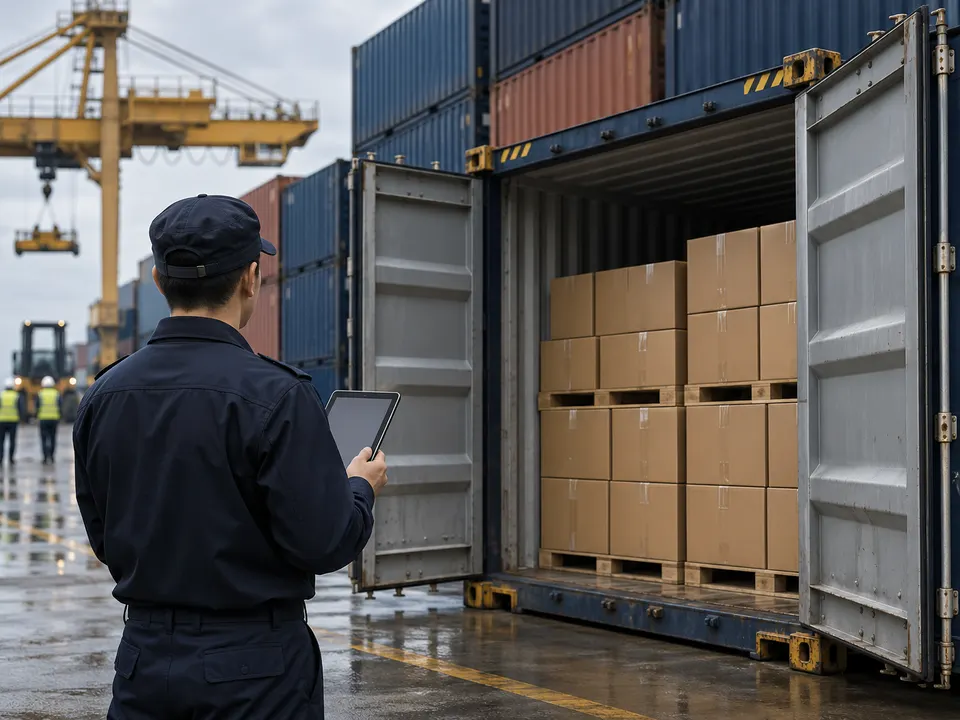
Your container is sitting at Yantian, Shekou or Nansha, but the terminal record shows no consignee with a mainland import licence. The forwarder is asking who will be the importer, the truck cannot be booked, and storage charges continue. That is the situation a Greater Bay Area import agency is designed to resolve, but only if the importer question is answered before the customs declaration locks.
The problem: two releases are not the same release
A common misunderstanding is that once the shipping line or airline issues a release, the cargo can leave the port. In mainland ports such as Yantian, Shekou, Nansha, Huangpu and at Baiyun or Bao’an airport, there are two separate steps. The carrier release only ends the transport carrier’s hold. Customs release requires an accepted declaration, correct taxes and, where applicable, inspection. Until both are complete, no receiving appointment can be made and no delivery truck can enter the yard. If the buying party is still not named or the invoice and packing list show a Hong Kong trading company while the mainland declaration needs a different consignee, the file stops at declaration: cargo remains available but cannot be lawfully removed. At road crossings such as Shenzhen Bay or Liantang/Heung Yuen Wai, the same mismatch can block the e-lock manifest, because the truck may cross but the customs importer on the declaration and the manifest importer must align.
Why the gap appears at GBA entry points
The gap usually starts before shipment. An overseas seller ships under EXW or FOB and does not ask who will be the mainland importer. A buyer may assume a Hong Kong office or a freight forwarder can act as the importing party, but Hong Kong procedures are separate from mainland entry, and a forwarder is not automatically the customs consignee. In consolidated air or sea cargo, one master bill may contain several house shipments, each needing its own mainland importer. If the packing list uses one product name, the commercial invoice uses another, and the bill of lading shows only a generic description, the declaration cannot be accepted. For products subject to permits — food, cosmetics, medical devices, used equipment, IT security modules, certain chemicals — the shortage of a certificate or an end-use statement becomes visible only at the port, after the cargo has already arrived.
The solution: a Greater Bay Area import agency step by step
The fix is to define the mainland importing party and rebuild the document chain before the declaration window closes.
- Confirm the import purpose. Domestic sale, processing trade, bonded storage, repair/return or exhibition each uses a different customs procedure. A Greater Bay Area import agency will not apply a blanket “import for home use” if the cargo is meant for a bonded warehouse in Qianhai, Nansha or Futian, because the admission and withdrawal records have different requirements.
- Set the importing party. We can act as the mainland importer of record under a written agency scope, using the correct entity name and unified social credit code on every document. This service is available through Greater Bay Area Import Agency. It must be agreed before the declaration is filed, not after a rejection.
- Reconcile the documents. Invoice, packing list, transport document, certificate and test report must show the same product name, model, unit, currency and Incoterm. If the bill of lading or air waybill has already been issued with the wrong consignee, a manifest amendment may be needed, and the terminal or airline may charge a documentation change fee. We check this against the actual port: Yantian and Shekou have different manifest amendment procedures, and Nansha/Huangpu are separate customs districts.
- Classify and confirm permits early. The HS code drives duty, consumption tax and VAT, but also the need for import licences or quarantine access. No specific rate is quoted until the code and origin are verified. The mainland tax sequence is: CIF customs value; duty = value × applicable rate; ad valorem consumption tax = (value + duty)/(1 − rate) × rate; VAT = (value + duty + consumption tax) × 13% or 9%. We will not assume the lower VAT or no consumption tax without the product file.
- Separate release from availability. For port imports, we coordinate Shenzhen Port Import Clearance to align the carrier release, customs release and the receiving appointment. If customs or quarantine selects the shipment for examination, we arrange evidence and site work under Customs Examination & Release Coordination, including manufacturer specs, labels, photos and end-use statements. Bonded admission and withdrawal are planned separately, because admission does not by itself clear the goods for mainland consumption.
Before you ship: verify the routing and handover
Do not treat GBA ports and crossings as interchangeable. Yantian and Shekou suit Shenzhen delivery; Nansha and Huangpu are Guangzhou customs areas; Baiyun and Bao’an are separate air cargo stations with their own receiving rules. Hong Kong import or transit clearance is a different customs boundary from mainland entry. For road freight via Shenzhen Bay or Liantang/Heung Yuen Wai, vehicle eligibility and cargo acceptance differ by commodity; Wenjindu/Man Kam To is primarily used for fresh food supply to Hong Kong. A route that works for one product may be refused for another, so confirm current acceptance for the actual goods before booking the truck.
To close the stuck file, send us the product name, HS code if known, origin country, actual port or crossing, import purpose and final delivery address. A Greater Bay Area import agency will return a document checklist and landed-cost scope based on that information: /en/contact/
Questions raised by this topic
Can a Hong Kong company be the mainland importer of record?
No. Mainland customs declaration requires a mainland entity with import and export rights registered at the relevant port. A Hong Kong company can handle the Hong Kong import or transit file, but the mainland entry needs a separate importer or an import agency.
Does using a Greater Bay Area import agency change the origin or tax treatment?
No. Origin and HS code determine duty and tax treatment. Acting as importer of record does not change the country of origin or the applicable rates.
If my cargo is already at Yantian or Shekou, can you still act as importer of record?
Yes, as long as the cargo has not already been customs-cleared. You may need a manifest or bill of lading amendment, and storage charges may continue, so send the documents quickly.
How are Hong Kong and mainland charges separated in a cross-border move?
Hong Kong import, export or transit clearance is a separate customs boundary from mainland entry. Each side has its own filing and release steps, and the cross-border trucking is a separate segment, so costs are allocated per operation rather than as one flat fee.
Can I use a bonded warehouse first and clear later?
Yes. Cargo can be admitted to a Qianhai, Nansha or Futian bonded warehouse before mainland consumption. But admission still requires an operator and an importer on record, and withdrawal later triggers the formal import declaration and taxes.
Prepared with automated research. Check the linked official material and the requirements for your shipment before acting.